

How to Calculate Mechanical Advantage with Petzl Gear
In technical rope systems, mechanical advantage (MA) is the key to minimizing effort while maximizing efficiency. Petzl, a trusted name in rigging and rescue equipment, offers innovative tools to streamline these calculations and improve system performance. Understanding how to calculate MA using Petzl gear is essential for both novice and experienced riggers.
This article explains the core principles of mechanical advantage and highlights how Petzl equipment can enhance your rigging systems.
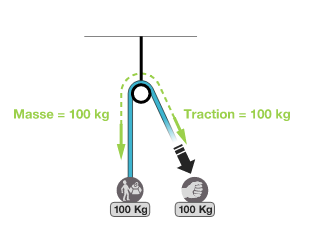
What Is Mechanical Advantage?
Mechanical advantage is the ratio of output force to input force in a system. In simpler terms, it’s how much easier a system makes lifting or moving a load. By using pulleys, ascenders, and other devices, you can distribute force more effectively and reduce physical strain.
Common MA Ratios:
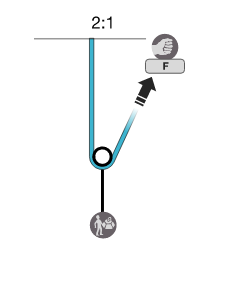
- 2:1: One pulley and one rope segment supporting the load.
- 3:1: Two pulleys and three rope segments sharing the load.
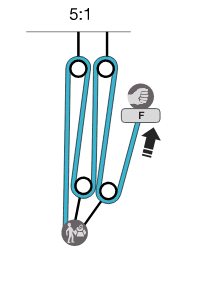
- 5:1: Advanced system for heavier loads or more complex operations.
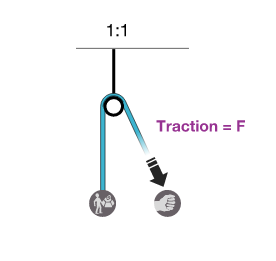
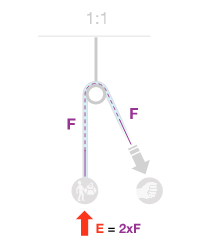
1:1 HAUL SYSTEM

2:1 HAUL SYSTEM

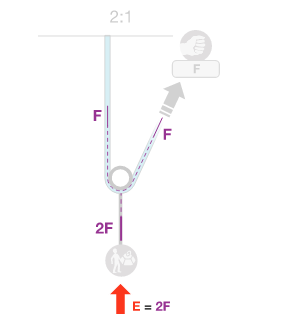
3:1 HAUL SYSTEM
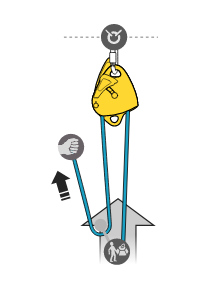
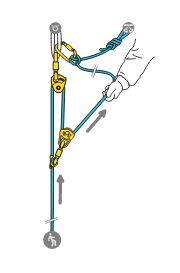
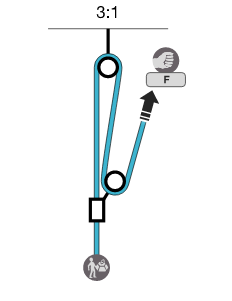

Note: the advantage of a 3:1 system is its ease of setup and that it can easily be converted to a complex system (7:1) with one additional pulley and some cord.
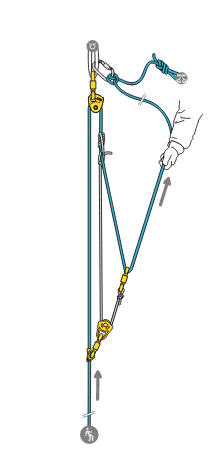
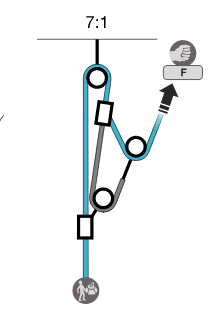

4:1 HAUL SYSTEM

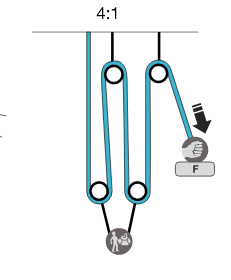
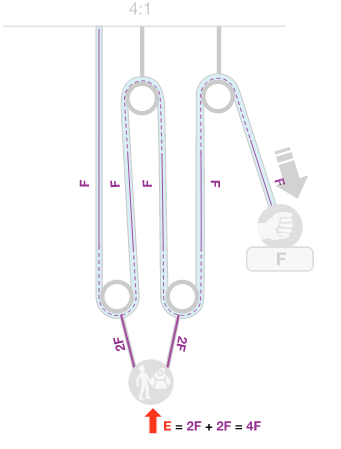
5:1 HAUL SYSTEM
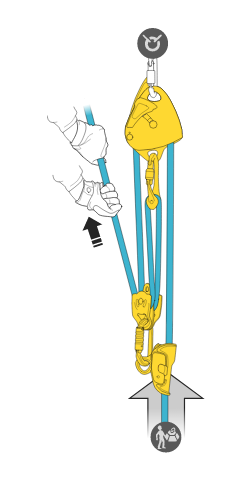


Using Petzl Gear to Achieve Mechanical Advantage
Petzl gear, such as pulleys, ascenders, and progress capture devices, plays a vital role in achieving efficient mechanical advantage. Here’s how to use these tools effectively:
1. Petzl Pro Traxion for Progress Capture
- The Petzl Pro Traxion integrates a pulley with a progress capture cam.
- Ideal for hauling systems, it prevents backsliding of the rope, ensuring continuous progress.
2. Petzl Jag System for Compact Efficiency
- A ready-to-use 4:1 MA system with sealed ball bearings for smooth operation.
- Great for tensioning systems, small team rescues, and personal hauling tasks.
3. Petzl Ascension for Secure Rope Gripping
- Acts as a progress capture device when combined with a pulley.
- Provides reliable performance in ascending and hauling scenarios.
Step-by-Step Guide to Calculating Mechanical Advantage
- Identify the System Configuration
- Count the rope segments supporting the load. Each segment reduces the input force required.
- Select the Right Petzl Gear
- Use high-efficiency pulleys like the Petzl Gemini or Pro Traxion to minimize friction.
- Choose appropriate connectors and carabiners for secure setups.
- Measure the Load Distribution
- Ensure each rope segment shares the load evenly to prevent system failure.
- Calculate the Ratio
- Divide the total load by the mechanical advantage ratio to determine the required input force.
Example: Calculating MA with Petzl Gear
Imagine a rescue scenario where you’re lifting a 150-lb load using a 3:1 MA system with Petzl pulleys and ascenders.
- The load is supported by three rope segments.
- Input force = 150 lbs ÷ 3 = 50 lbs.
This setup reduces physical strain, making it manageable for a small team or even a single rescuer.
Tips for Optimizing MA Systems
- Minimize Friction: Use pulleys with sealed ball bearings, like the Petzl Gemini, to reduce resistance.
- Inspect Equipment: Regularly check for wear and tear on ropes, pulleys, and connectors.
- Train Regularly: Practice setting up and using MA systems to build confidence and efficiency.
Conclusion
Mechanical advantage is a fundamental concept in rigging and rescue, and Petzl gear simplifies its application. By understanding system configurations and leveraging Petzl’s high-performance tools, you can create efficient and safe setups for any operation. Start building your expertise with reliable equipment and proven techniques.
For more resources and training, visit Rigging Lab Academy.
Peace on your Days
Lance


Comments are closed.