Blog

3x1 anchor 3 point

3-Point Anchor Systems in Rope Rescue

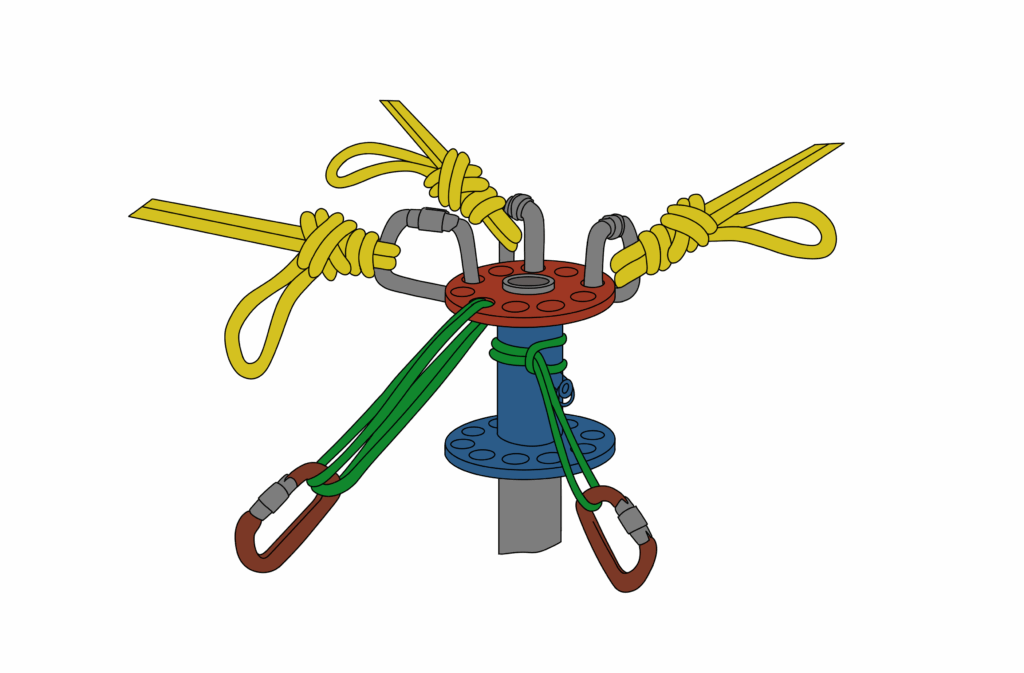
Anchors Are the Foundation of Every System In rope rescue, every system beginsโ€”and ultimately dependsโ€”on the anchor. Whether you are lowering, raising, or managing a directional line, the integrity of the entire operation is tied to how well the anchor system is built. A failure at the anchor is not a component failureโ€”it is a […]

3-Point Anchor Systems in Rope Rescue Read More ยป

highline system failures

Highline System Failures

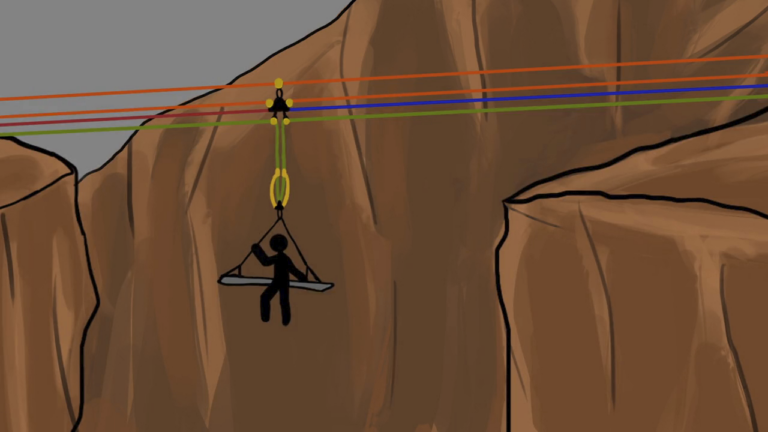
Highline systems do not fail because of equipmentโ€”they fail because of how the system is designed, tensioned, and operated. Every failure can be traced to breakdowns in force management, system independence, or operational control. These are not isolated problems; they compound. Once a system begins to drift outside of controlled behavior, failure becomes a sequence,

Highline System Failures Read More ยป

movement highline systems

Highline Operations Roles, Movement, and System Control

A highline system does not succeed because it is built correctlyโ€”it succeeds because it is operated correctly. Most system failures occur during movement, not during setup. The structure may be sound, but without coordinated operation, control is lost, and forces become unpredictable. Highline operations are defined by three elements: Clear roles Controlled movement Coordinated input

Highline Operations Roles, Movement, and System Control Read More ยป

highline configurations

Highline Configurations in Rope Rescue When and How to Use Each System

Highline systems are not built from a single template. The configuration selected must match the terrain, the objective, and the level of control required. The mistake is not choosing the wrong gearโ€”it is choosing the wrong system structure. Each configuration changes how force moves, how the load behaves, and how the team must operate. Understanding

Highline Configurations in Rope Rescue When and How to Use Each System Read More ยป

highline geometry

Highline System Components Explained for Rope Rescue Operations

A highline system is only as strong and predictable as the components that build it. While the overall system moves a load across a span, each individual element has a defined role that must remain clear and uncompromised. Understanding these components is not about memorizing partsโ€”it is about understanding how each element contributes to control,

Highline System Components Explained for Rope Rescue Operations Read More ยป

reeving highline

Highline Systems Fundamentals in Technical Rope Rescue

Highline systems are built to move a load across a horizontal span when direct vertical access is not possible or introduces unnecessary risk. The system must maintain clearance, control, and stability while transporting the load from one side to the other. This is not achieved through a single rope or device, but through a structured

Highline Systems Fundamentals in Technical Rope Rescue Read More ยป

Artificial High Directionals

Artificial High Directionals When They Are Needed and How They Support Rescue Operations

Introduction Artificial High Directionals (AHDs) represent a decisive shift from basic anchor-based rigging into controlled, engineered system behavior. Teams that are competent in raise and lower operations often reach a point where efficiency, safety, and control begin to degradeโ€”not because of poor technique, but because of environmental limitations. Edges, terrain transitions, and structural barriers introduce

Artificial High Directionals When They Are Needed and How They Support Rescue Operations Read More ยป

Artificial High Directional A-Frame โ€” Sideways Configuration (SA Frame)

Artificial High-Directional A-Frame โ€” Sideways Configuration (SA Frame) The sideways A-frame configuration is a contingency Artificial High Directional used when no suitable anchors exist directly over the edge, and the force must be managed laterally across the surface. Unlike the standard forward-biased A-frame, the SA frame operates with the structure orientedย 90 degrees to the edge,

Artificial High Directional A-Frame โ€” Sideways Configuration (SA Frame) Read More ยป

litter operations

Patient Packaging and Transport Architecture in Rope Rescue

1. Executive Purpose and Scope In technical rescue, patient packaging is not an accessory task performed โ€œbefore the rigging starts.โ€ It is the first structural decision in the evacuation system because it determines how the patient will behave as a load once gravity, friction, and motion are introduced. Packaging converts an injured person into a

Patient Packaging and Transport Architecture in Rope Rescue Read More ยป

technical rope rescue systems

A Comprehensive Curriculum for New Technicians

The Technical Rope Rescue Foundation A Comprehensive Curriculum for New Technicians Technical rope rescue is not defined by the equipment used or by the completion of a single operation. It is defined by the technicianโ€™s ability to understand how forces move through a system, how environments shape operational decisions, and how patient outcomes depend on

A Comprehensive Curriculum for New Technicians Read More ยป

two-rope offset canyon rescue

Why Austrian Economics Belongs in Rope Rescue

Why Austrian Economics Belongs in Rope Rescue Wealth, Labor, Time, and Risk Allocation Technical rope rescue looks like engineering. We calculate force. We build anchors. We manage friction and redundancy. Physics sets the outer limits. If we violate those limits, the system fails. However, engineering alone does not explain how decisions unfold on scene. In

Why Austrian Economics Belongs in Rope Rescue Read More ยป

Two Tension Offset Systems for Complex Rope Rescue

Austrian Economics and Technical Rope Rescue

Austrian Economics and Technical Rope Rescue Scarcity, Trade-Offs, and Rigging Under Pressure Technical rope rescue looks like engineering. We study force vectors, anchor strength, friction, and redundancy. We calculate loads. We manage geometry. Physics defines the hard limits. If we exceed those limits, the system fails. However, physics does not decide what we build. Two

Austrian Economics and Technical Rope Rescue Read More ยป

mechanical advantage systems

Principles and Architecture of Mechanical Advantage in Rope Rescue

Technical Systems Report: Principles and Architecture of Mechanical Advantage in Rope Rescue 1. Purpose and Scope of Force Analysis In professional technical rescue, rigging must transition from intuitive guesswork to a disciplined application of structural physics. Establishing a rigorous analytical framework for force and work is the primary safeguard for system integrity. By defining these

Principles and Architecture of Mechanical Advantage in Rope Rescue Read More ยป

mastering rope rescue anchor and the rigging

Geometric and Mechanical Force Vectors in Complex Rescue Rigging Systems

Geometric and Mechanical Force Vectors in Complex Rescue Rigging Systems Executive Summary In technical rope rescue, anchor systems function as engineered structures rather than ad-hoc attachment points. Their performance is governed by geometric force vectors, mechanical leverage, material capacity, and environmental degradation. This report establishes a disciplined engineering framework for evaluating anchor integrity, analyzing force

Geometric and Mechanical Force Vectors in Complex Rescue Rigging Systems Read More ยป

Mitigation of System Overpowering and Anchor Failure in Raising Operations

Mitigation of System Overpowering and Anchor Failure in Raising Operations 1. Purpose and Strategic Objectives In technical rescue, the transition from a static load to a dynamic raise represents a critical escalation of risk to both system integrity and personnel safety. This operation must be evaluated through the Conservation of Energy. While mechanical advantage (MA)

Mitigation of System Overpowering and Anchor Failure in Raising Operations Read More ยป

highline system in action

5 Counter-Intuitive Truths of High-Angle Rescue Rigging

5 Counter-Intuitive Truths of High-Angle Rescue Rigging When you need to move something heavy, your first instinct is probably to pull a rope as tight as you can. Itโ€™s a common-sense principle we learn as kids: a taut line is a strong line. This intuition serves us well for everyday tasks, but in the world

5 Counter-Intuitive Truths of High-Angle Rescue Rigging Read More ยป

Multi Point Main Anchor Station AHD

Bridging Assessment and Critical Analysis in Technical Rigging Education

From Question to Judgment Why Assessments Alone Are Insufficient for Force-Based Decision Making In rope rescue, failure rarely occurs because a team lacked equipment or memorized procedures incorrectly. It occurs because a system was repurposed without re-evaluating how forces now behave. This is where most training subtly breaks down. Assessment questions are excellent at confirming

Bridging Assessment and Critical Analysis in Technical Rigging Education Read More ยป

Field Reference Guide Rescue Knots and Anchor Systems

This document serves as a field reference guide for trained rescue professionals. Its purpose is to consolidate the critical principles of anchor selection, knot application, and load dynamics to ensure operational safety and efficiency in technical rescue scenarios. The information contained herein is derived from established rescue standards and practices and is intended to supplement,

Field Reference Guide Rescue Knots and Anchor Systems Read More ยป

nfpa 2500 overview for rope rescue

Rope Rescue Standards and Regulations for Professional Teams

Standards and regulations form the backbone of professional rope rescue. While skills, equipment familiarity, and terrain experience all matter, none of them exist in a vacuum. Technical rope rescue is a legally defined and operationally bound discipline, shaped by documents, committees, and long cycles of testing, revision, and consensus. A rescuer who does not understand

Rope Rescue Standards and Regulations for Professional Teams Read More ยป