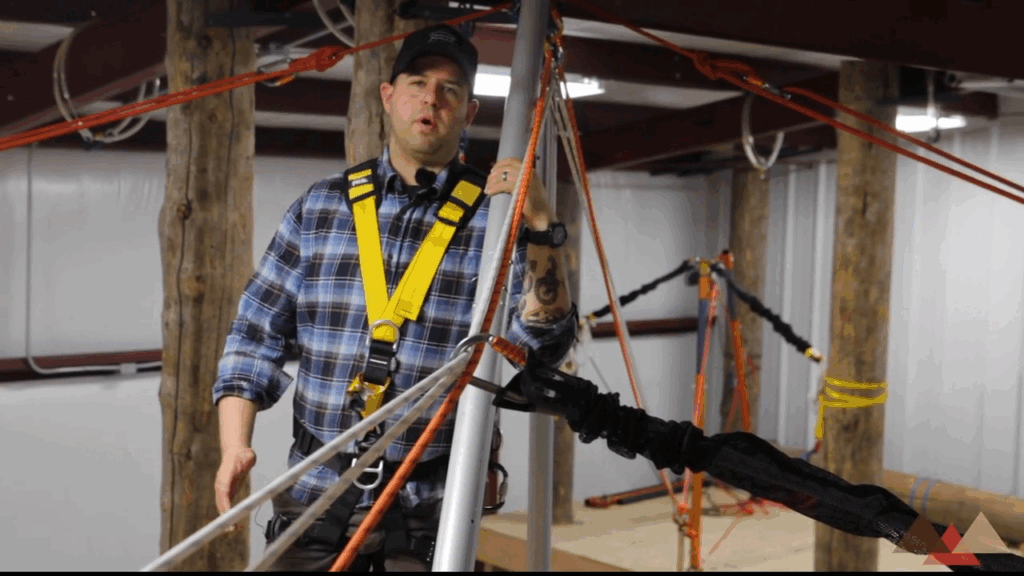
twin tension rope system

floating the patient terrain assessment

Building a Rope Rescue Team with Terrain Awareness and Training Manuals

Congratulations on stepping into leadership for your search and rescue ropes team. Itโ€™s no small task. Building a rope rescue team requires more than equipment โ€” it demands a keen understanding of terrain, a plan to close knowledge gaps, and a structured training manual that evolves with your team. These three pillars form the backbone […]

Building a Rope Rescue Team with Terrain Awareness and Training Manuals Read More ยป

transitioning to two-tensioned rescue systems

TTRS Anchor Systems with Artificial High Directionals for Two Person Loads

Technical rope rescue demands anchor systems that are strong, efficient, and designed for redundancy. Building TTRS anchor systems with Artificial High Directionals (AHDs) is one of the most effective ways to achieve these goals, especially when managing a two-person load such as a patient and attendant in a litter. By combining the principles of sound

TTRS Anchor Systems with Artificial High Directionals for Two Person Loads Read More ยป

two tension twin tension lower single operator back tension safety

CMC Clutch Twin Tension Two Tension Lower

The CMC Clutch Twin Tension Two Tension Lower has become a defining standard in modern rope rescue systems. By integrating the Clutch into a Twin Tension Rope System (TTRS), rescuers can achieve smoother control, balanced load distribution, and built-in redundancy. Whether lowering or raising, the Clutch ensures safe transitions, adaptability across rescue environments, and confidence

CMC Clutch Twin Tension Two Tension Lower Read More ยป

Mechanical Advantage Choices for Twin Tension Rope Systems

Mechanical Advantage Choices for Twin Tension Rope Systems

Mechanical Advantage Choices for Twin Tension Rope Systems Twin tension rope systems (TTRS) have changed the way modern rescue teams operate. Instead of one mainline and one belay, both ropes share the load equally, providing redundancy, balance, and smooth control. But while the setup looks clean, the question comes quickly in the field โ€” what

Mechanical Advantage Choices for Twin Tension Rope Systems Read More ยป

Building the Minimal Mechanical Advantage Kit

Building a Minimal Mechanical Advantage Kit with the 20โ€“80 Rule

The 20โ€“80 Rule in Action: Building the Minimal Mechanical Advantage Kit In rope rescue, complexity can be your enemy. Too many devices, too much gear, and too many choices under stress can slow a team down and increase risk. Thatโ€™s where the 20โ€“80 Rule comes in: with about 20% of the gear, you can accomplish

Building a Minimal Mechanical Advantage Kit with the 20โ€“80 Rule Read More ยป

climber fall rescue - 5 First Principles of Rescue Rigging

Climber Rescue Team Using Twin Tension Rope Systems

Climber Rescue Team Using Twin Tension Rope Systems A climber begins their ascent. Movements are steady and deliberate. Each step shows control. But even skilled climbers can fall. And when they do, preparation makes the difference and it is here we see a Climber Rescue Team Using Twin Tension Rope Systems. The Fall: Fast Response

Climber Rescue Team Using Twin Tension Rope Systems Read More ยป

Mainline Rescue Systems

Mainline Rescue Systems

Mainline Rescue Systems An understanding of mechanical advantage systems in both raising and lowering modes is essential for any rope rescue technician. Dealing with mass and force plays a critical role in ensuring safe and efficient operations. From tensioned anchor systems to high directionals and load positioning, each element contributes to building reliable mainline systems.

Mainline Rescue Systems Read More ยป