

I just got back from RLA’s first ever Live On-site training in Mt. St. Helens National Monument with the Volcano Rescue Team. It was awesome, I loved connecting with these amazing people. They ranged from full time EMS professionals, self employed designers, engineers, freelancers, mechanics, guides and a host of other passions and occupations. Jason Ilowite headed up the foray into the known and unknown in terms of training and coaching for Rigging Lab Academy.
Mike Williams, Director of VRT, opened up our initial conversation with something like…”can you help us with…” I was super excited as Mike contacted us prior to our official opening of RLA Live ™. We went on to discuss our protocol through a Discovery Phase which probes and isolates pain points and hidden objectives. Mike was extremely excited to know that part of our service includes building an actual video course for the team’s future use.
The Volcano Rescue Team (VRT) was formed in 1986 under the auspices of North Country EMS. This organization provides a resource to handle mountain, canyon and high angle rescue-related incidents with the opening of Mt. St. Helen’s to climbing. The team still operates under the NCEMS (North Country EMS) umbrella, but is totally volunteer and is self-supporting. This is in addition to its function as a technical mountain rescue organization. The VRT is an accredited member of and follows the training guidelines of the Mountain Rescue Association (MRA).
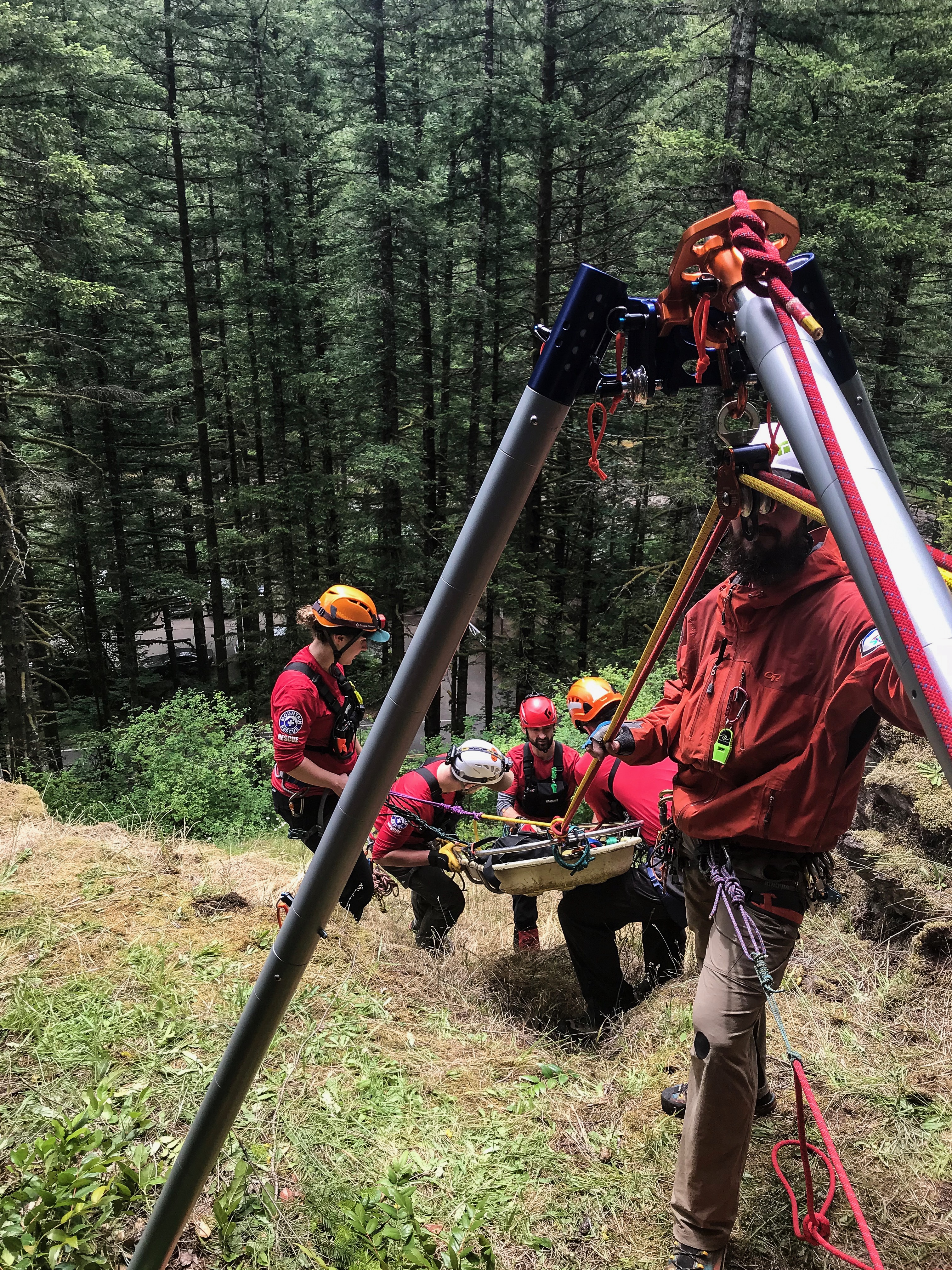
The Problem
Some of the technical rescue missions VRT responds to require artificial high directionals (AHDs) and up till now, VRT has had a lack of necessary equipment and training to turn high directional centric rescue missions into a reality. Anyone who has had to respond to high angle rescue missions using a low trajectory (ground level) systems to execute a high angle rescue knows how extremely painful this is. In the past, they created a high directional using the old “wrap n frap” method using ten-foot 4x4s… obviously this “classic” tool set is not something that invites a sense of pleasure to carry, much less set up.
The New Opportunity
A New Opportunity presented itself and a new AHD Portable Anchor System was purchased. I want to be clear here and point out an opportunity isn’t a tool.. an opportunity a set of circumstances that makes it possible to do something. VRT needed to be in agreement with this move. It would require changes in their SOPs and would also remove a more traditional set of tools… replaced by things like understanding vector forces, resultants, guying systems and two rope raise and lower systems.
As a group they understood this would forever change their future. Change can be difficult at times for some and for others… maybe more so. Either way, once they understood there were better options and their jobs could be made much easier, the changes became simply part of the adventure.
We pulled together some vital information during our Discovery Phase and made a point to include our findings in both our preassessment and curiculum for the course. Everything was approved and off we went.
Goals and Objectives
The goal was to implement a strategy to integrate both new and seasoned riggers into one complete “unit”. Using the new Arizona Vortex, they recently purchased, as type of “collection point” for anchor systems, mechanical advantage systems, raise and lowering systems and so on. We had a few objectives in all of this.
- Expand the knowledge base and use of AHDs via
- Easel A Frames
- SA Frames
- Two Rope Systems
- Offsets
- Challenge the teams leadership skills with new information.
- Set the team on a path for continued and progressive success.

The Call To Action
- Commit to incorporating AHD training into the VRT’s SOPs
- Remove non essential training from the SOPs in order to focus on the essential elements of rescue rigging.
- Minimize gear use.
- Multi-purpose gear only
- Limited set up options during first year of training in order to focus on the 20-80 rule.
- Establish leadership skills and training
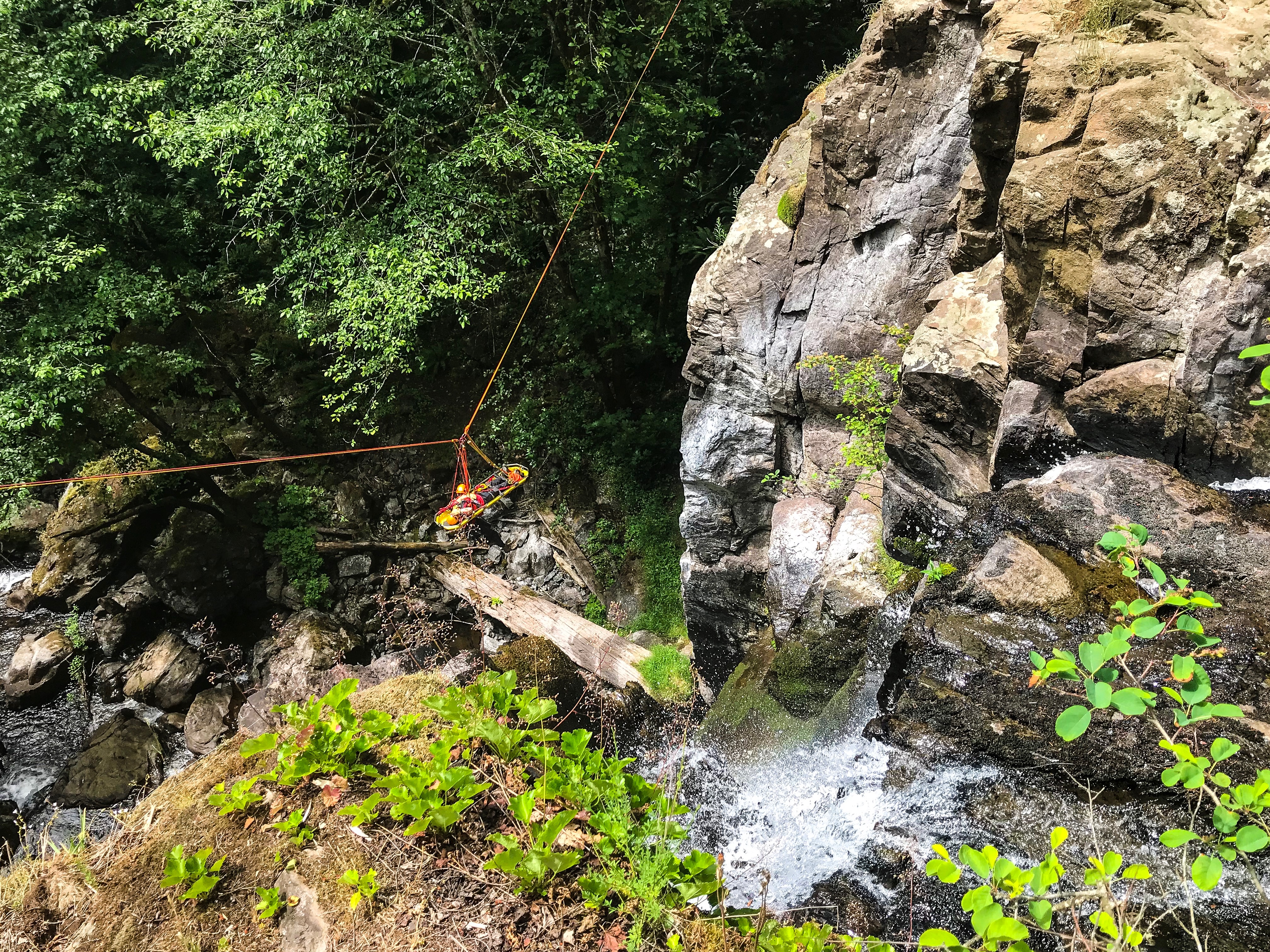
In the end, we completed all crux elements of our Offset objectives. We had the team review the Search and Rescue Mini Course prior to the training dates and this proved to be very helpful.
- Tag Lines
- Guide Lines
- Track Lines
- Skate Lines
- Deflections (Dynamic Directional)
- Two Rope Tension Line
We look forward to coming back next year to raise the ante again for this amazing crew of athletes, riggers, humanitarians and teammates.
Peace on your Days
Lance


Comments are closed.