Arizona Vortex

Artificial High Directionals

Artificial High Directionals When They Are Needed and How They Support Rescue Operations

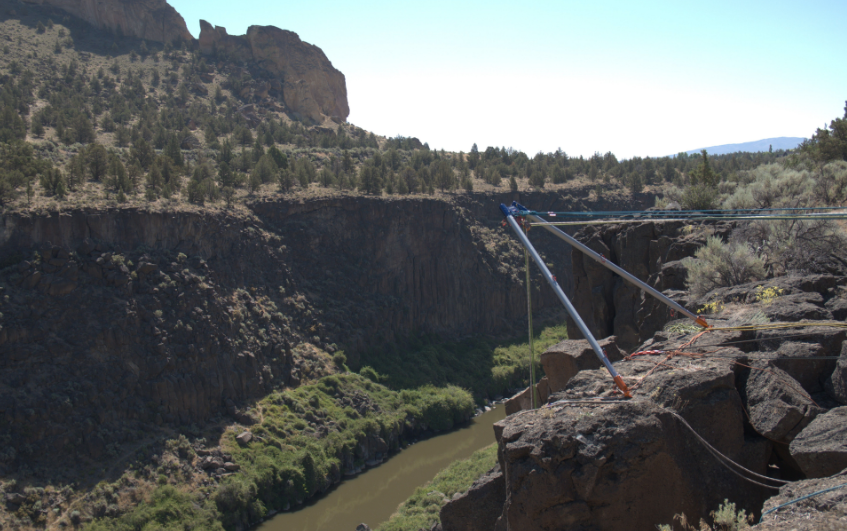
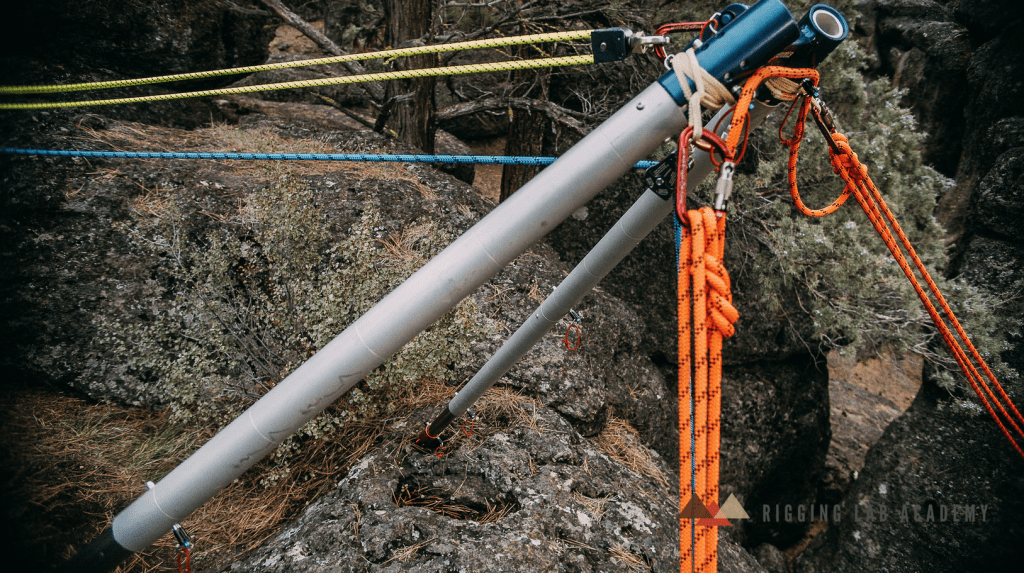
Introduction Artificial High Directionals (AHDs) represent a decisive shift from basic anchor-based rigging into controlled, engineered system behavior. Teams that are competent in raise and lower operations often reach a point where efficiency, safety, and control begin to degrade—not because of poor technique, but because of environmental limitations. Edges, terrain transitions, and structural barriers introduce […]

Artificial High Directionals When They Are Needed and How They Support Rescue Operations Read More »
confined space rescue

Precision and Protocol in Leadership for Confined Space Rescue Operations

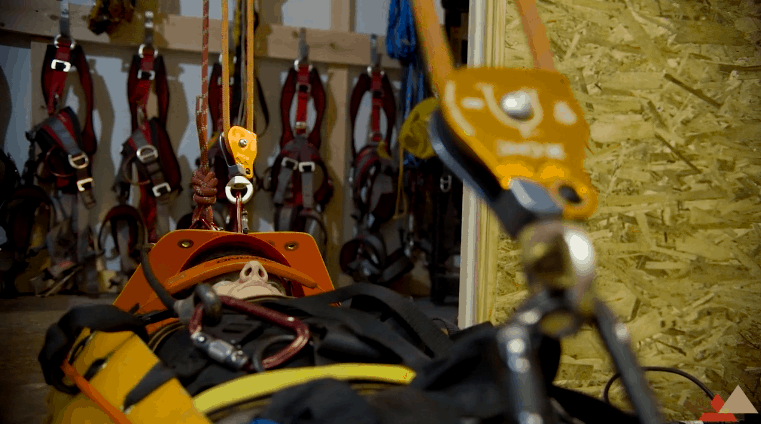
In the discipline of technical rescue, the anchor system remains the defining constant—the mechanical and moral foundation of every operation. As Steve Crandall asserts, “Without a solid anchor, properly rigged, the system is bound for failure.”In Confined Space Rescue (CSR), this principle takes on a leadership dimension. Decision-makers are forced to manage high-risk, low-frequency events

Precision and Protocol in Leadership for Confined Space Rescue Operations Read More »

dynamic offset

When to Choose an Offset Instead of a Highline in Rope Rescue

When to Choose an Offset Instead of a Highline in Rope Rescue – One of the most common choices in rope rescue is deciding between a highline and an offset system. Both can move a patient or load across complex terrain, but they solve the problem in very different ways. A highline acts like a

When to Choose an Offset Instead of a Highline in Rope Rescue Read More »

Rope Rescue Math – Understanding High-Directional Forces

Rope Rescue Math Guide to High Directional Forces

Rope Rescue Math – Understanding High-Directional Forces In rope rescue, knowing the numbers can be the difference between a safe system and one that’s on the edge of failure. When working with high-directionals—such as aerial ladders, tripods, or A-frames—forces don’t just act straight down; they spread out along multiple paths. The diagrams you’ve seen are

Rope Rescue Math Guide to High Directional Forces Read More »

force angles in gin pole systems

Force Angle Verification and System Readiness in Gin Pole Rigging

Force Angle Verification and System Readiness in Gin Pole Rigging. Before committing any load—especially a human subject—to a directional or monopod system, the rig must pass a structural readiness check. This means more than simply tightening ropes or locking pins. It’s about confirming that every mechanical and geometric component is functioning within allowable thresholds. Failure

Force Angle Verification and System Readiness in Gin Pole Rigging Read More »

Sideways A-Frame with Winch Load Control and Guying Strategy

Sideways A-Frame with Winch Load Control and Guying Strategy

Sideways A-Frame with Winch Load Control and Guying Strategy When rigging a sideways A-frame for load movement, especially with a winch mounted to the rear leg, the entire structure behaves more like a torquing monopod than a traditional tripod or A-frame. The applied force pushes downward through the head, but the system’s tendency to rotate

Sideways A-Frame with Winch Load Control and Guying Strategy Read More »

dynamic hauling systems a-frame and monopod

Dynamic Directional Hauling with A-Frame and Monopod Systems

Dynamic Directional Hauling with A-Frame and Monopod Systems When a Straight Haul Isn’t Possible Some rescue environments—like confined spaces, vaults, or utility holes—don’t allow for a direct vertical haul. You may have obstacles, limited space, or poor anchor positioning. To solve this, rescuers use dynamic directional hauling, which means redirecting the rope path using multiple

Dynamic Directional Hauling with A-Frame and Monopod Systems Read More »

key articles on artificial high directionals (AHDs) - Artificial High Directionals Purpose Built Systems and Improvised Solutions

Purpose Built Artificial High Directionals

Artificial High Directionals: Purpose-Built Systems and Improvised Solutions Artificial High Directionals (AHDs) play a crucial role in technical rescue operations by creating elevated anchor points for hauling, lowering, and managing edge transitions. While purpose-built products like the Arizona Vortex and SMC Terradaptor are industry standards, rescue teams often encounter scenarios where they must improvise using

Purpose Built Artificial High Directionals Read More »

Horizontal Systems Gear

Horizontal Systems Gear

Taglines Taglines are used in horizontal rope systems to control, stabilize, or maneuver a load laterally across a gap or down a slope. They are often simple tensioned lines attached to a load, providing directional control. Purpose: Taglines ensure the load moves along a predetermined path, reducing the chance of unwanted swinging or collisions with

Horizontal Systems Gear Read More »

CSR2 Pulley System

CSR2 Pulley System for Confined Space Rescue

Confined Space Rescue (CSR): Navigating Tight Quarters with Precision Confined space rescues are among the most challenging scenarios faced by rope rescue professionals. Limited access, restricted movement, and the need for precise rigging all combine to demand an advanced level of skill and specialized equipment. In such environments, the CSR2 Pulley System emerges as a

CSR2 Pulley System for Confined Space Rescue Read More »

key articles on artificial high directionals (AHDs) - Artificial High Directionals Purpose Built Systems and Improvised Solutions

Artificial High Directionals in Rope Rescue

Safe and Effective Use of Artificial High Directionals in Rope Rescue Artificial high directionals (AHDs) have become essential in rope rescue, allowing teams to set up anchors in hard-to-reach places and overcome complex challenges. While these tools offer a range of configurations, each setup has unique strengths and limitations. Here’s a guide to maximizing the

Artificial High Directionals in Rope Rescue Read More »

Knot Craft and Knot Passing and in between

Knot Craft and Knot Passing

Mastering Knot Craft and Knot Passing In rope rescue and rigging, the ability to skillfully create and manipulate knots is more than just a basic requirement—it’s an essential part of ensuring safety, efficiency, and success in the field. Knot craft and knot passing are not isolated skills; they are deeply interwoven techniques that, when mastered,

Knot Craft and Knot Passing Read More »

Implementing a Skate Block System with a Monopod Artificial High Directional-over the edge two twin tension system for rope rescue

Mastering the Two-Tension Rope System

Introduction to Two-Tension Rope Systems The two-tension rope system is a fundamental component in high-angle rescue operations, representing the primary method taught by RLA (Rescue Learning Academy) for efficiently lowering and raising rescue loads. This system, particularly when integrated with the Multi-Purpose Device (MPD), offers a safer and more manageable approach by eliminating fall factors

Mastering the Two-Tension Rope System Read More »

Force Multiplier Mechanics

Force Multiplier Mechanics

Fundamentals of Force Multiplier Mechanics Force multipliers are essential components in the world of rigging and rope rescue, offering a way to enhance efficiency and safety by amplifying effort. Through leveraging angles, pulleys, and friction management, these systems allow rescuers to move heavy loads with less physical force. Mastering the mechanics of force multipliers is

Force Multiplier Mechanics Read More »

Patient Packaging and Litter Handling Floating the litter

Floating the Litter Using an A-Frame and Gin Pole Trackline

Floating the Litter Using an A-Frame and Gin Pole Trackline Steep angle litter work represents one of the most challenging scenarios in high-angle rescue operations. The primary challenge lies in ensuring patient contact and visual oversight while navigating challenging terrain. These conditions often necessitate the use of a carefully chosen and highly functional system to

Floating the Litter Using an A-Frame and Gin Pole Trackline Read More »

Rope rescue training for veterans covers leadership, mechanical advantage, and advanced rigging skills and Hidden treasures in team leadership

The Story of Rigging Lab Academy

How Rigging Lab Academy Began: Uncovering Hidden Treasures in Team Leadership The journey of Rigging Lab Academy began with a simple but profound mystery: “Why are retention and recall missing from technical rope rescue training?” Inspired by Sherlock Holmes, the search for answers led to transformative insights that reshaped how individuals and teams approached rigging

The Story of Rigging Lab Academy Read More »

Elevated Anchors and Resultant Management

Elevated Anchors and Resultant Management

Elevated Anchors and Managing Resultants in Rope Rigging Systems The use of elevated anchors, also known as high directional anchor systems, is a critical component in advanced rope rigging. Mandated by NFPA 1670 for rope technicians, these systems address edge management challenges, reduce friction at the edge, and maintain stability through proper force vector and

Elevated Anchors and Resultant Management Read More »

Arizona Vortex Basic Configurations Overview

Arizona Vortex Basic Configurations Overview

Arizona Vortex Basic Configurations Overview The Arizona Vortex stands out as one of the most versatile and essential tools in technical rescue and rigging. Its ability to adapt to various configurations makes it indispensable for professionals in rescue, rope access, and other vertical environments. In this overview, we’ll explore the basic configurations of the Arizona

Arizona Vortex Basic Configurations Overview Read More »

Arizona Vortex Setup Guide

Arizona Vortex Setup Guide

General Guidelines to a Successful Operation of the Arizona Vortex Excerpt From The Arizona Vortex Guidebook – A Rigging Lab Academy Premiere Course Operating the Arizona Vortex successfully demands an understanding of the forces at play and a disciplined approach to setup and execution. The safety and reliability of the Vortex depend on resisting all

Arizona Vortex Setup Guide Read More »

Understanding Resultants in Artificial High Directionals

Understanding Resultants in Artificial High Directionals

Understanding Resultants in Artificial High Directionals In the world of technical rope systems, understanding and controlling resultants is critical for ensuring the stability of artificial high directionals (AHDs). At its core, a resultant is a vector—a measure of force and direction. When applied to rigging, resultants determine whether a high directional system remains stable under

Understanding Resultants in Artificial High Directionals Read More »